
When Does a Cylinder Head Need Replacement?
Professional Advice Based on Real Engine Failure Patterns
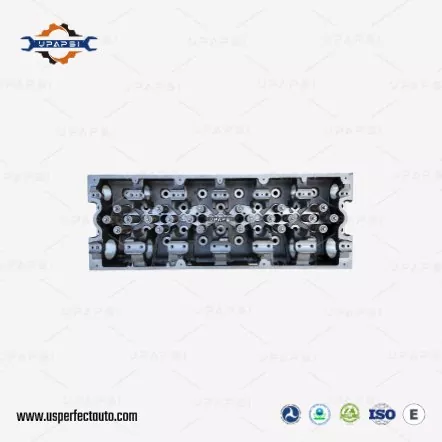
A cylinder head is one of the most essential parts in an internal combustion engine, as it seals the combustion chamber, regulates airflow, houses valves and injectors, manages heat through cooling passages, and protects against overheating through complex cooling passages.
Cylinder head failure rarely occurs suddenly; rather it's usually the result of stress or improper operation over time. Knowing when it's necessary to replace one can prevent catastrophic engine damage as well as unnecessary repair costs.
This article details key situations where replacing a cylinder head is both recommended and inevitable.
1. Cylinder Head Cracks
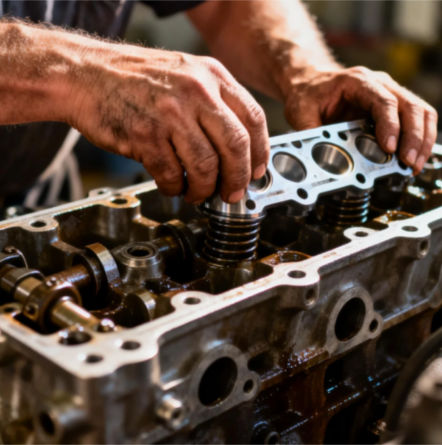
Cracking is the primary and most significant reason for replacing cylinder heads. They are exposed to extreme thermal cycles when working under heavy loads in diesel engines, particularly.
Over time, repeated overheating or sudden temperature fluctuations can cause cracks to form on valve seats, injector bores or cooling passages. Some cracks may even be visible to the naked eye but only detectable through pressure testing or dye inspection.
Once a structural crack has been identified, replacement is generally the only viable solution.
2. Overheated Cylinder Head
Overheating may not always crack cylinder heads; it can warp them instead. A warped head no longer seals properly with its head gasket and this leads to compression loss, leakage, or oil contamination; in mild cases this may be corrected through resurfacing.
However, when warpage exceeds manufacturer tolerances, machining becomes inadvisable and replacement of the cylinder head may be the safer solution.
3. Repeated Head Gasket Failures
A single head gasket failure does not necessarily indicate that the cylinder head is defective. But repeated gasket failures serve as a strong indicator.
If a new gasket fails after proper installation, torque procedure and cooling system repair, further investigation must take place into its cause. Cracked or uneven deck surfaces or localized hot spots could be at play here; in such instances replacing the cylinder head could prevent future failures from recurring.
4. Severe Valve Seat and Guide Damage
A cylinder head houses valves, valve seats and guides which must all maintain exact tolerances to provide combustion sealing. Excessive wear on valve seats or loose guides compromise combustion sealing while excessive wear, dropped seats or loose guides compromise combustion sealing even further - although such damage can sometimes be repaired.
Repairs become unreliable when multiple seats or the base material become compromised, leading to repairs becoming ineffective and improper valve geometry. At that point, replacement becomes the best way forward to ensure long-term durability and correct valve geometry.
5. Coolant and Oil Mixing in the Head
Coolant contamination within engine oil or found within the cooling system can be a serious threat, with head gasket failure being one common source. Internal cracks within the cylinder head could also result in similar symptoms.
If pressure testing reveals internal leakage paths within a head, repair options are severely limited. Its Replacing it eliminates repeated contamination risk and bearing damage risks.
6. Damage to Injector and Glow Plug Bores
Modern diesel cylinder heads depend heavily on precise injection and glow plug positioning for maximum fuel atomization and combustion efficiency. Any disruptions, such as erosion, cracking or excessive wear of injector bores may have severe implications on these processes and lead to decreased efficiency.
Extreme bore damage can lead to compression loss, injector blow-by and fuel leakage - and replacement is usually more reliable than attempts at local repairs.
7. Emissions-Related Cylinder Head Failures
Modern engines use the cylinder head as an essential element for emissions control, including EGR passages, injector angles, and combustion chamber design that must be carefully optimized to minimize emissions. When failure occurs due to emissions-related components like EGR passages or injector angles being misengineered or improper design.
Installing an incorrect or damaged cylinder head can lead to fault codes, derates, or emissions system failures. When cracks or blocked passageways impede emissions compliance, replacement may be necessary in order to restore compliance.
8. When Repair Costs Exceed Replacement Value
A cylinder head may technically be repairable; however, when repair costs exceed replacement value it becomes unwise to undertake repair efforts. When the combined costs associated with machining, welding, pressure testing, component replacements approach or exceed that of purchasing or refurbishing new or remanufactured heads replacement becomes the more economical alternative.
Conclusion/Thoughts
Cylinder heads do not fail without prior warning. Indicators such as overheating, coolant loss, white exhaust smoke emissions, misfires or repeated gasket failures should never be disregarded as potential indicators for failure.
Before making a decision, accurate diagnosis, pressure testing and understanding failure patterns are of utmost importance. Within reality, replacing a cylinder head at the appropriate time may save an entire engine.
Selecting the proper replacement, whether OEM or high-quality aftermarket, is as integral to successful repair as understanding when replacement is necessary.
Related News
Leave me a message