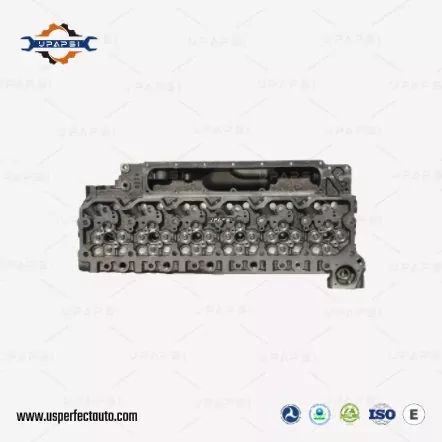

How I Learned to Choose the Right Cylinder Head for a Diesel Truck
A Real-World Story from Diesel Repair Experience
The first time I had to replace a cylinder head on a diesel truck, I honestly thought it would be straightforward.
The engine had overheating issues, coolant loss, and white smoke under load. The diagnosis pointed clearly to a cracked cylinder head. I assumed that as long as I found a “compatible” head for the engine model, the job would be done.
I was wrong.
That experience—and many others that followed—taught me that choosing the right cylinder head for a diesel truck is not about ticking boxes. It’s about understanding how the engine works, how the truck is used, and how small details can decide whether the repair lasts 50,000 miles or fails within months.
This is not a textbook guide. It’s a practical story about how diesel cylinder head selection actually works in the real world.
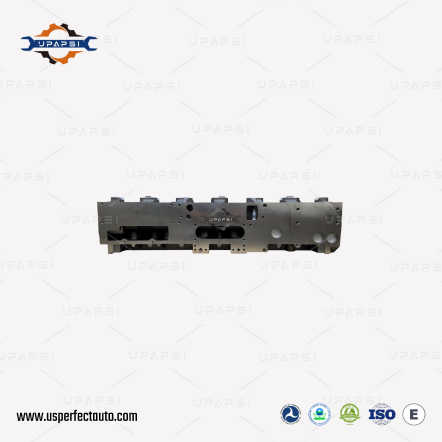
When a Cylinder Head Becomes More Than a Part
In gasoline engines, a cylinder head is important.
In diesel engines, it is critical.
Diesel engines operate at much higher compression ratios and under sustained heavy load. Over time, heat cycles, pressure, and vibration expose every weakness in a cylinder head—casting quality, cooling design, machining accuracy, and valve seat integrity.
I’ve seen trucks come back with repeat failures not because the mechanic made a mistake, but because the cylinder head itself was never right for the application.
That’s when I stopped asking, “Will it fit?”
And started asking, “Will it survive?”
Step One: Understanding the Engine Beyond the Nameplate
Early on, I made the mistake of choosing a cylinder head based only on engine model and year.
Same engine family. Same displacement. Should be fine—right?
In reality, diesel engines evolve constantly. Injector design changes. Emissions standards tighten. Cooling passages get revised. Valve materials improve.
I learned quickly that before choosing a cylinder head, I needed to confirm:
The exact engine model and configuration
The emissions system it was designed to work with
The original OEM part number
Two engines that look identical on paper may require very different cylinder heads in practice.
OEM vs Aftermarket: A Lesson in Balance
At first, I leaned heavily toward OEM cylinder heads. They felt safer.
OEM heads usually fit perfectly, work smoothly with emissions systems, and come with predictable quality. The downside, of course, is cost—and availability, especially for older diesel trucks.
That’s when aftermarket cylinder heads entered the picture.
Over time, I learned that aftermarket does not automatically mean lower quality. A well-manufactured aftermarket head, built with proper casting control and machining standards, can perform just as reliably as OEM.
The key difference isn’t OEM vs aftermarket.
It’s who made it, and how it was made.
New, Remanufactured, or Rebuilt: What Really Matters
I’ve worked with all three.
New cylinder heads offer peace of mind—but not always peace of budget.
Rebuilt heads can work, but only when the rebuilder is experienced and transparent.
Remanufactured heads often hit the sweet spot when done properly.
What I learned is this:
A “cheap” head that fails early is never cheap.
Labor, downtime, coolant contamination, and repeat teardown cost far more than choosing the right head the first time.
Casting Quality: The Failure You Don’t See Coming
Some cylinder head failures don’t show up immediately.
I’ve seen heads that looked perfect out of the box, only to develop cracks between valve seats months later. When we inspected them closely, the issue was always the same—poor casting quality and uneven wall thickness.
A diesel cylinder head lives through constant thermal stress.
If the casting isn’t right, nothing else matters.
Since then, casting quality has been one of the first things I evaluate when sourcing a cylinder head.
Valve Train and Injection: Where Details Matter
One of the most expensive mistakes I’ve seen was ignoring valve train compatibility.
Wrong valve material. Incorrect seat hardness. Slight mismatch in injector bore geometry.
The engine ran—but not well. Fuel economy dropped. Exhaust temperature climbed. Eventually, the valves paid the price.
A cylinder head must work as part of a system, not as a standalone component.
Cooling Design: The Silent Lifesaver
Cooling is where good cylinder heads separate themselves from bad ones.
Diesel engines generate enormous heat, especially under load. A cylinder head with poor coolant flow design will develop hot spots—usually around exhaust valves.
Once that happens, cracks and gasket failures are only a matter of time.
I’ve learned to look closely at coolant passage design, not just external appearance.
Emissions Changed Everything
Modern diesel engines made cylinder head selection even more complex.
EGR passages, injector angles, and combustion chamber shape all affect emissions performance. Installing the wrong head on an emissions-regulated engine can trigger fault codes, derates, and DPF issues.
This is where “almost compatible” is simply not good enough.
Mistakes I’ve Seen Too Often
Over the years, the same mistakes keep appearing:
Choosing based on price alone
Skipping pressure testing
Reusing worn valve components
Assuming all aftermarket heads are the same
Every one of these shortcuts eventually costs more.
What I Look for Now When Choosing a Cylinder Head
Today, my process is much clearer.
I don’t just ask if a cylinder head fits the engine.
I ask if it fits the job the engine is doing.
Before making a decision, I always confirm:
Exact engine configuration
Original OEM reference
Emissions compatibility
Casting and machining standards
Supplier credibility and support
When these boxes are checked, problems rarely follow.
Final Thoughts
Choosing the right cylinder head for a diesel truck is not about finding the fastest or cheapest solution. It’s about choosing a component that can survive real-world conditions.
Experience taught me that the best cylinder head is the one you don’t have to think about again after installation.
Before You Commit, Ask Yourself:
Do I fully understand the engine configuration?
Is this head designed for my emissions system?
Can the casting handle long-term heat and pressure?
Do I trust the supplier behind it?
If the answers are yes, you’re likely making the right choice.
Related News
Leave me a message